
Home › Solutions › Water Leak Detection
Monitor · Water Leak Detection
Water Leak Detection that finds the leak before the damage
In a data centre or server room, a split pipe under a raised floor or a weeping cooling loop can run for hours before anyone sees it. We supply leak detection that catches the first drops, raises the alarm where you need it, and on long runs tells you where along the cable the water is.
Wired sensing cable, wireless battery sensors, or both, matched to the room, the alarm path and the system you already run.
The Essentials
What Is Water Leak Detection?
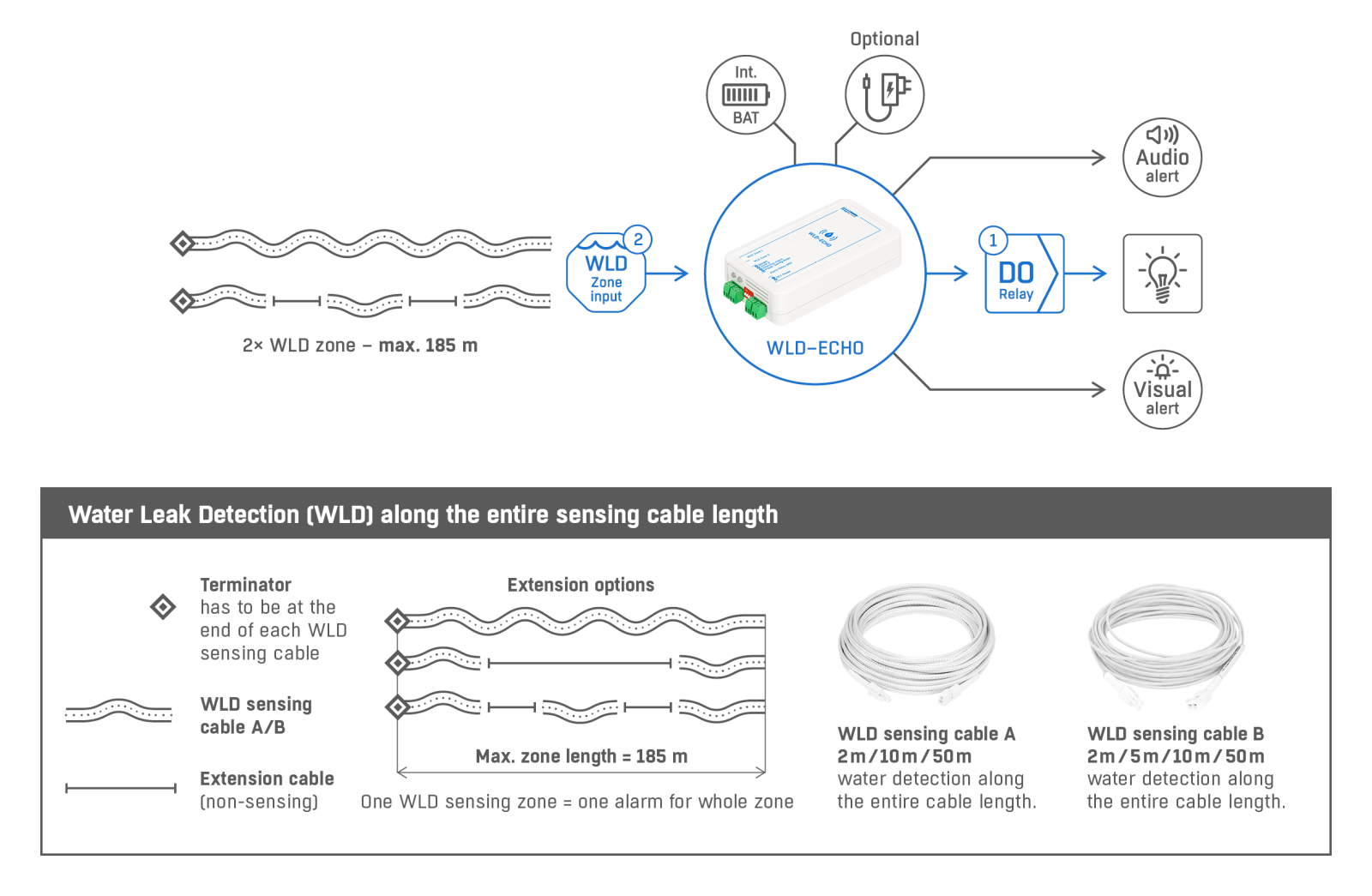
Water leak detection (WLD) is a set of sensors that raises an alarm as soon as water or another conductive liquid appears where it shouldn’t. Sensing cable detects along its whole length; spot sensors watch a single point. The alarm can sound on site, switch a relay into an alarm panel or BMS, or reach your phone and dashboard over the network.
The more advanced option, leak location, also reports how far along the cable the water is.
Data Centres & Server Rooms
Under a Raised Floor, Where Matters as Much as Whether
Cooling units, humidifiers, chilled-water pipework and now liquid-cooled racks all put water close to live equipment, usually out of sight under a raised floor or behind a row of racks.
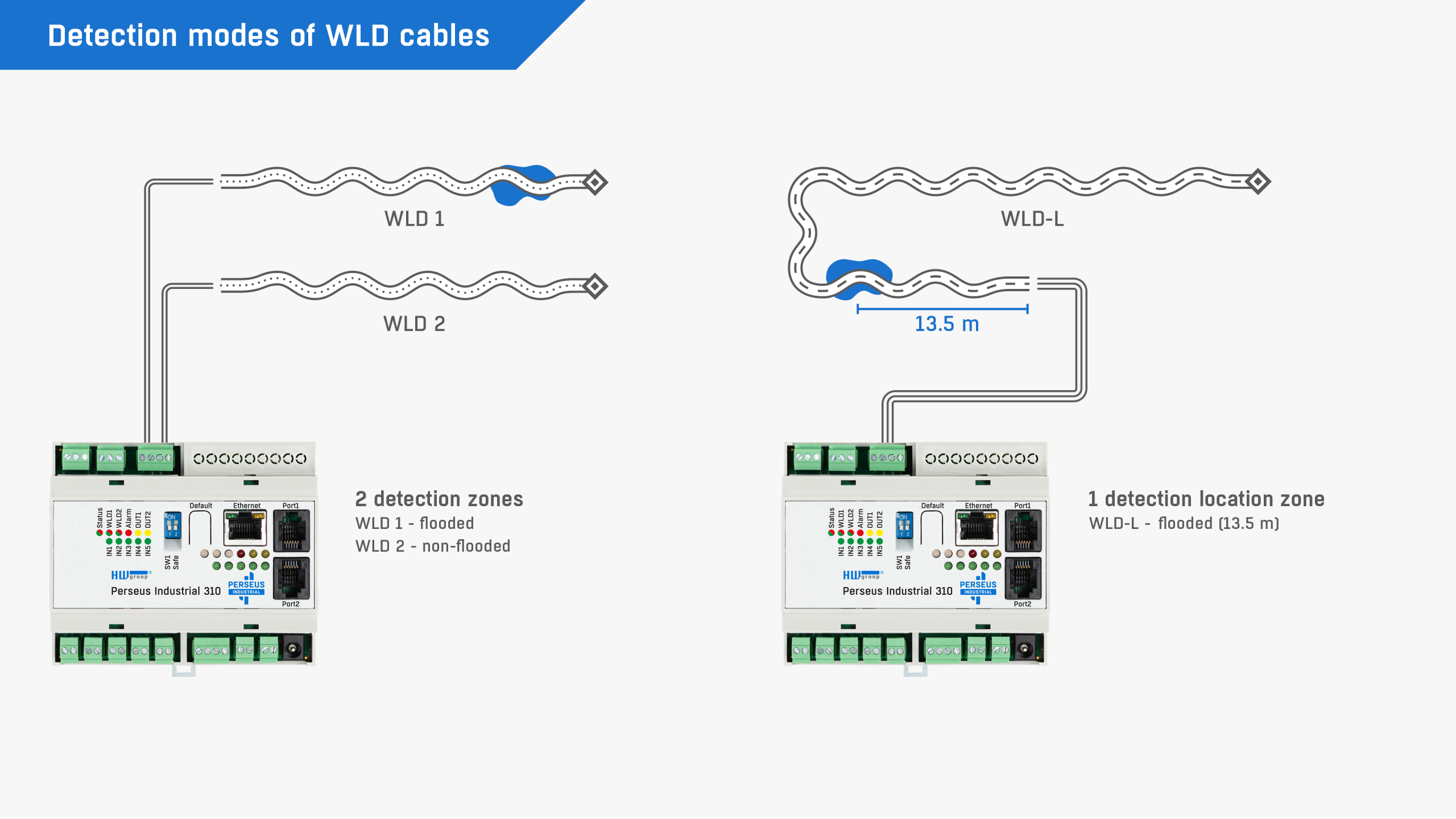
Find it, don’t hunt for it. Location Cable L on a Perseus Industrial 310 or 315 reports the distance to the leak to ±4%, so the team lifts the right floor tile first.
Built for liquid cooling. The cable detects water and glycol mixtures around CDUs, manifolds and cooling loops.
Into the systems you already watch. SNMP, Modbus/TCP, BACnet and MQTT into your DCIM or BMS, with temperature, humidity and energy metering on the same unit.
Smaller comms rooms. The WLD2 or WLD-ECHO covers the floor without a full monitoring unit.
Perseus Industrial › Location Cable L › Server room monitoring ›
Detect, Cover, Locate
Three Ways to Know It’s Wet
The difference is what the alarm tells you. A spot sensor tells you which point got wet. A sensing cable tells you a zone got wet. A location cable tells you how far along the run to go.
Spot sensor
Watches one point: under a sink, a water heater, a drip tray.
Alarm: “Sensor 2 is wet”
Sensing cable zone
Covers a run: along a wall, under a raised floor, beside a pipe.
Alarm: “Water somewhere in zone 1”
Location cable
Covers the run and reports the distance to the leak.
Alarm: “Leak at 42 m” — accurate to ±4%, about ±1.7 m here
Two Routes
Cable or Wireless, Chosen by the Room
Most sites mix both: cable where water travels, spot sensors where it starts.
Wired sensing cable
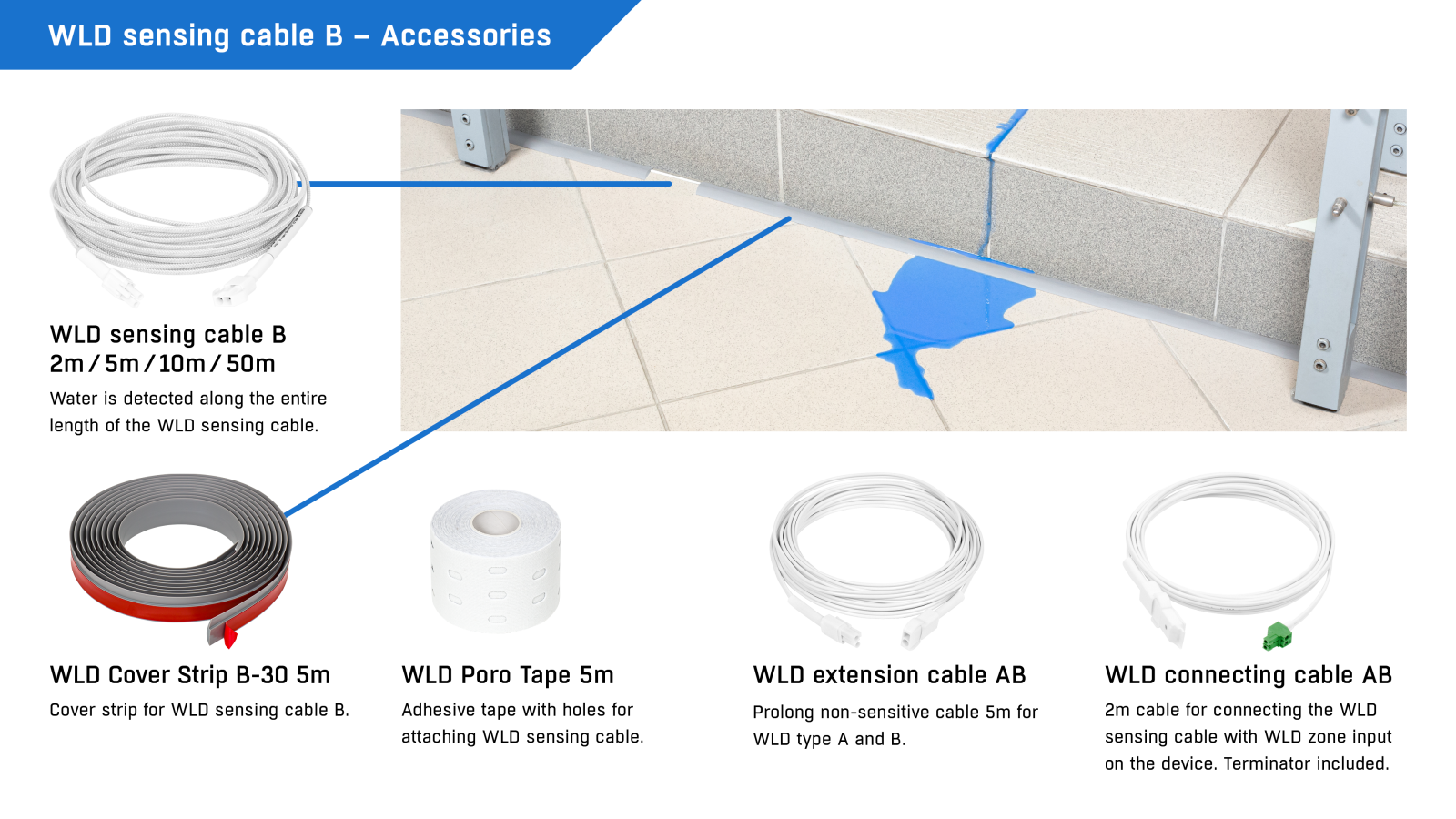
Continuous coverage. WLD cable detects along its whole length, so one run protects a wall, a floor void or a pipe route.
Any alarm path. A dry-contact relay into an intruder panel or BMS, or network alerts by email, SNMP and SMS from a monitoring unit.
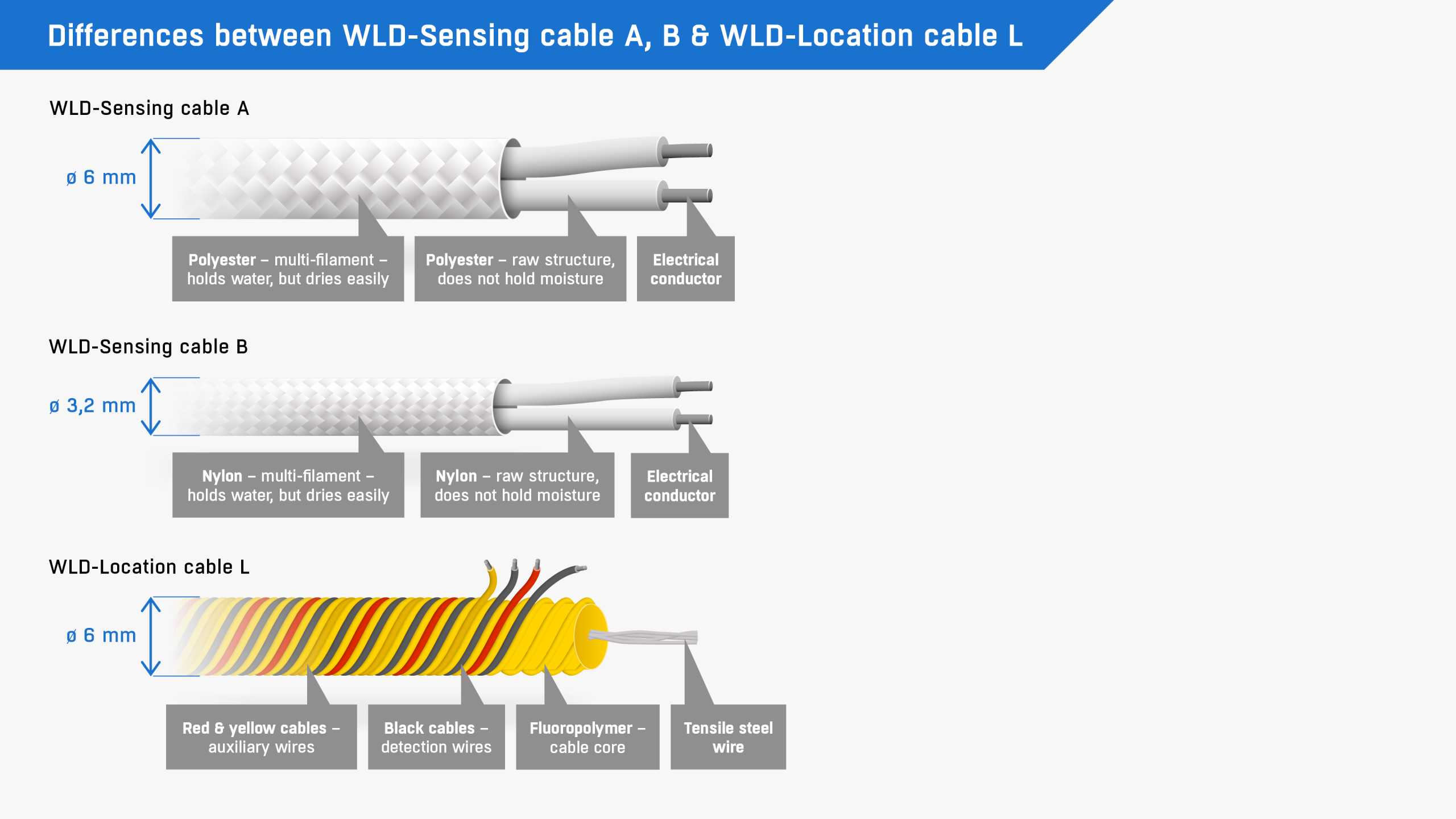
Can locate. Location cable reports where the leak is, not just that there is one.
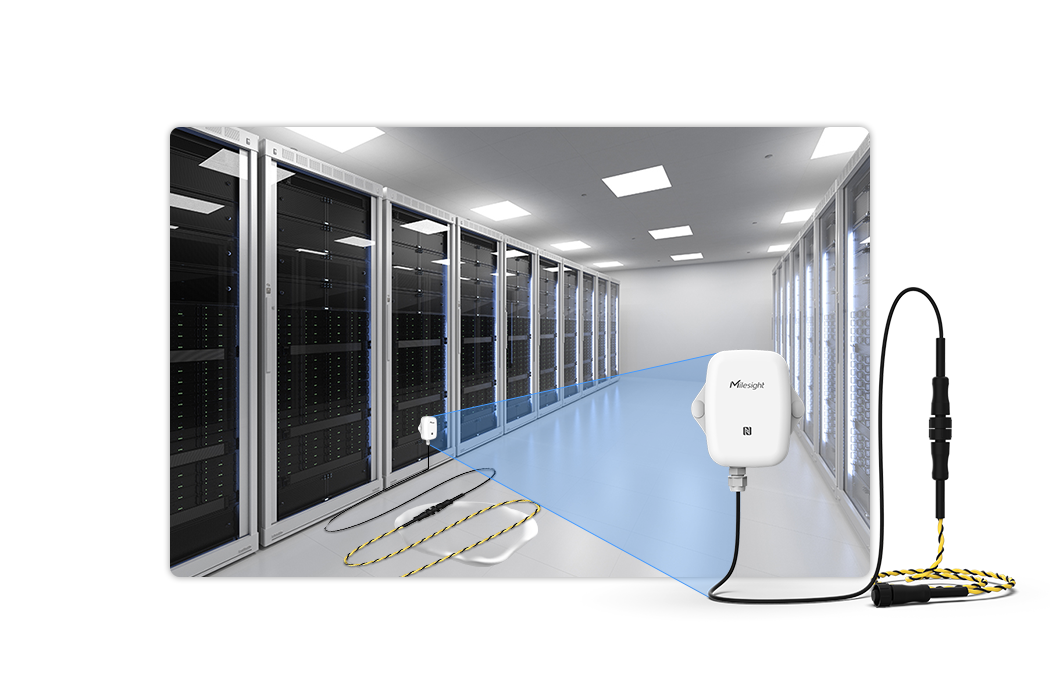
Wireless spot sensors
No cabling. Battery powered, IP67, in place in minutes. Suited to retrofits and spread-out sites.
Alerts on your phone. LoRaWAN to a gateway on site, then alarms and dashboards on IoT Factory.
More than leaks. Some models also report temperature and humidity from the same unit.
The Options
Choose by What Should Happen When It Gets Wet
Start from the response you need on the day. The hardware follows from that.
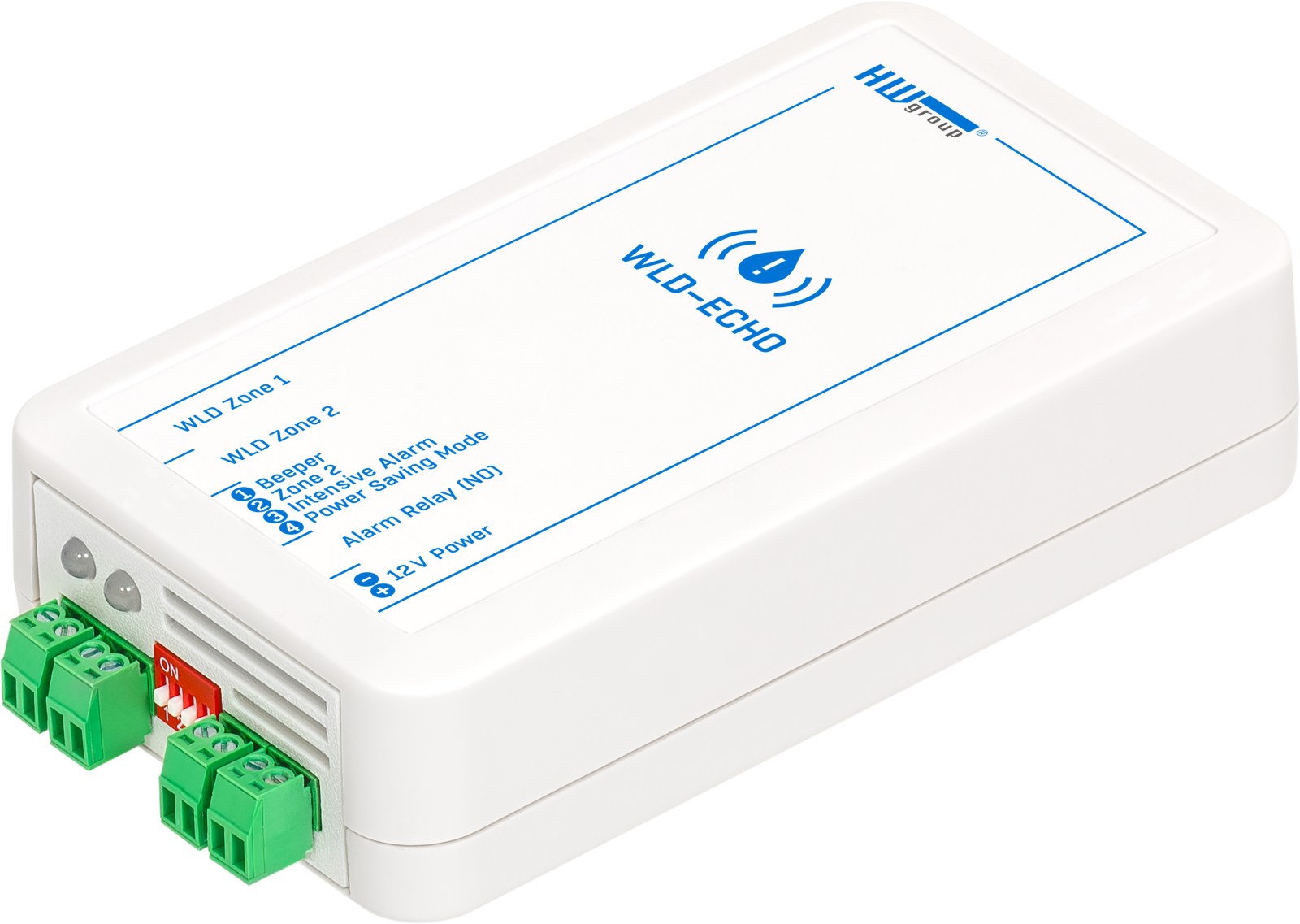
Sound the alarm and switch a contact
Two cable zones, sounder and visual alarm, and a dry-contact relay into your alarm panel or BMS. Runs on AA batteries or 12 V DC.

Email and SNMP alerts across four zones
Four sensing-cable zones on Ethernet or WiFi, with alerts straight from the unit and a cable-fault warning.
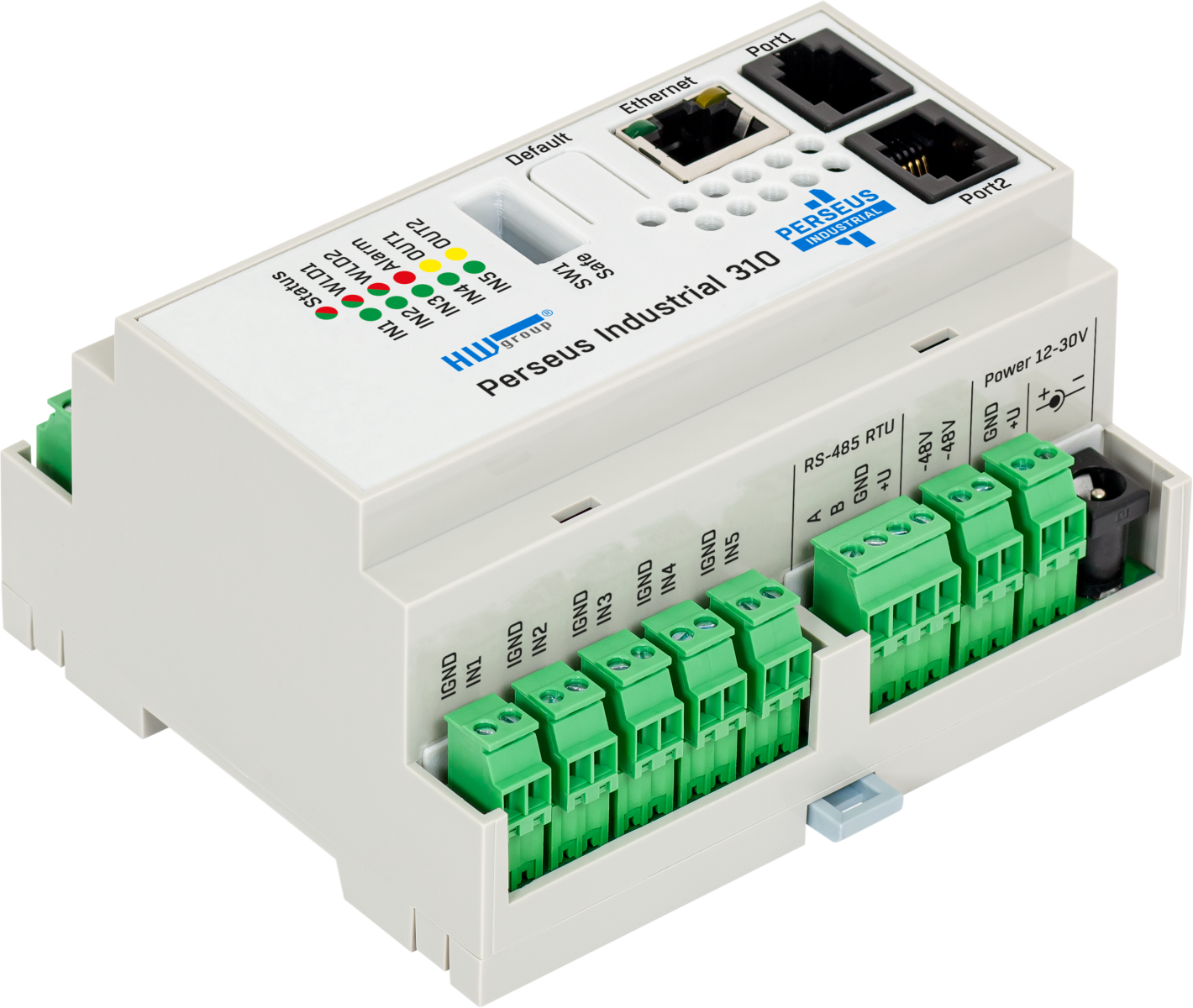
Find the exact spot
Location cable on a Perseus Industrial 310 or 315 reports the distance to the leak, up to 100 m per zone, inside a full DIN rail monitoring unit.
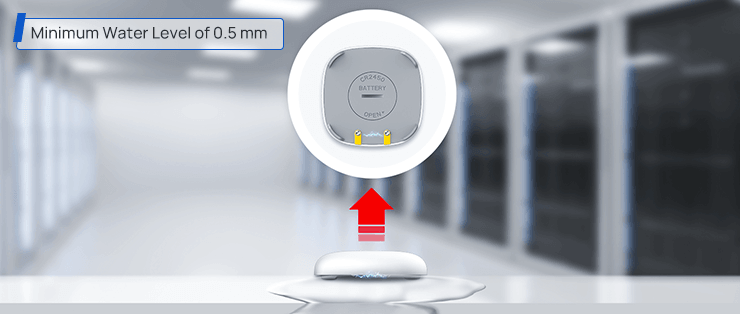
Cover a point with no wiring
Coin-sized LoRaWAN sensor with a built-in buzzer. Alarms at 0.5 mm of water. Up to 5 years on one battery.
Watch a tray or a strip of floor
Spot probe or 3 m sensing rope, with temperature and humidity in the same LoRaWAN unit. IP67, long-life battery.
Already running HW Group monitoring?
The Perseus Monitoring 145 and 150 have a leak zone built in, and the STE2 R2 takes a leak sensor. Adding leak detection can be a cable, not a new box.
How It Works
From Risk Points to a Tested Alarm
Map the risk
Where water comes from: pipe runs, cooling, roof, plant, kitchens. Where it would do the most damage.
Pick the sensing
Cable for runs and floor voids, location cable for long routes, spot sensors for single points.
Set the alarm path
Siren on site, relay into the alarm panel or BMS, email and SMS, or LoRaWAN into IoT Factory.
Stage and test
We configure and test the kit in Galway before it ships, so it alarms the way you expect on day one.
Where It Fits
The Rooms Where a Leak Costs Most
Data Centres & Server Rooms
Cable under raised floors, around cooling units and beside liquid-cooling manifolds, alongside temperature and power monitoring.
Plant & Boiler Rooms
Boilers, pumps, valves, heat exchangers and glycol circuits, where a small weep turns into a flooded floor overnight.
Hotels & Apartments
Bathrooms, corridors and risers, where water from one room travels down through several floors.
Healthcare & Labs
Rooms with sensitive equipment and stock, where an early alarm protects both the kit and the service.
Warehouses & Archives
Water ingress along walls and loading areas, caught before it reaches stock, documents or stored materials.
Offices & Commercial Buildings
Kitchens, toilets, AC units and ceiling voids, monitored with the rest of the building.
Outside the Building
Water Rising Outside?
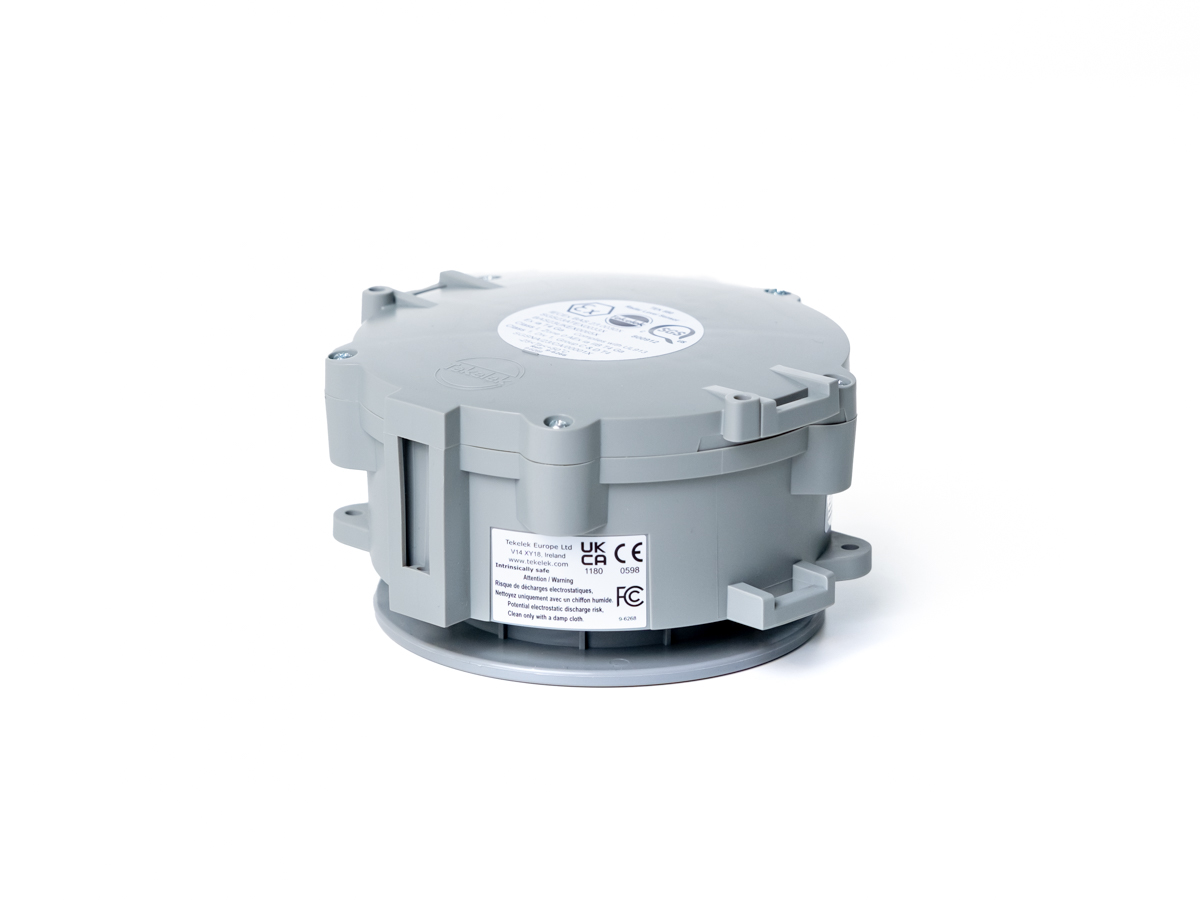
Rivers, ponds, sumps, attenuation tanks and sewerage are a level question, not a leak question. The TEK 880 battery-powered cellular radar measures water level without touching it and alerts as it rises.
River & flood level monitoring › Wastewater & septic tanks ›
FAQ
Water Leak Detection Questions
What is water leak detection (WLD)?
Water leak detection (WLD) is a set of sensors that raises an alarm as soon as water or another conductive liquid appears where it shouldn’t. Sensing cable detects along its whole length, while spot sensors watch a single point. The alarm can sound on site, switch a relay into an alarm panel or BMS, or reach your phone and dashboard over the network.
Sensing cable or spot sensor: which do I need?
Use sensing cable where water can travel or pool anywhere along a route: under a raised floor, along a wall line or beside a pipe run. Use spot sensors where a leak starts at a known point, such as a water heater, a drip tray or an air-conditioning unit. Most sites use both: cable where water travels, spot sensors where it starts.
Why does leak location matter in a data centre?
Under a raised floor, finding the wet spot can mean lifting tile after tile while the leak keeps running. A location cable on a Perseus Industrial 310 or 315 reports the distance to the leak to within ±4%, about ±0.4 m per 10 m of cable, so the team goes straight to the right tile and the right pipe.
Can it connect to our intruder alarm or BMS?
Yes. The WLD-ECHO has a latching dry-contact relay that wires into a spare input on an intruder alarm panel, a BMS or a PLC. Perseus monitoring units go further, with SNMP, Modbus/TCP, BACnet/TCP and MQTT for direct integration with a BMS, DCIM or SCADA system, plus email and SMS alerts of their own.
Does it need mains power or a network?
Not always. The WLD-ECHO runs on two AA batteries with its own sounder and visual alarm, so it works with no mains or network at all. Milesight sensors are battery powered and need a LoRaWAN gateway in range. Perseus units need DC or PoE power and a LAN connection, and the 315 adds a built-in LTE modem.
How accurate is leak location?
The location cable reports the leak position to within ±4% of the distance, about ±0.4 m for every 10 m of cable, and finds it in 15 to 30 seconds. Each zone runs up to 100 m. For reliable detection it needs at least 3 mm of liquid and 15 mm of cable in contact with it.
Will it detect glycol or other liquids?
These sensors work on conductivity, so they detect water and other conductive liquids, including the water and glycol mixtures used in data centre cooling loops and heating circuits. That makes them suitable around CDUs, manifolds, chillers and plant room pipework, as well as under sinks, water heaters and air-conditioning units.
How long do the batteries last?
The WLD-ECHO runs 2 to 3 years on two AA cells. The Milesight WS303 is rated up to 5 years, and the EM300 leak sensors over 10 years at their best-case settings. Real-world life depends on the reporting interval and radio signal, which we set with you during configuration so you know what to expect.
Talk to Us About Leak Detection
Tell us the rooms, the runs and how you want to be alerted. We’ll spec the sensing, the alarm path and the platform, and test it before it ships.
TITAN IoT Ltd · Racecourse Business Park, Ballybrit, Galway, H91 A9NN
+353 91 757500 · iot@titan.ie
Serving Ireland, the UK and Europe via Vadnet · Private 5G via Druid · Medical via Solsta