Home › Solutions › Lift Emergency Phones
Lift Emergency Phones Over 4G Compliant After the Copper Line Goes
Every lift car must be able to reach a staffed monitoring centre — and the analogue phone lines carrying those calls are being withdrawn across Ireland. TITAN IoT supplies the migration: a 4G gateway your existing lift phone plugs straight into, staged per site in Galway, ready for a single lift or a full portfolio rollout.
What Is a 4G Lift Emergency Phone Solution?
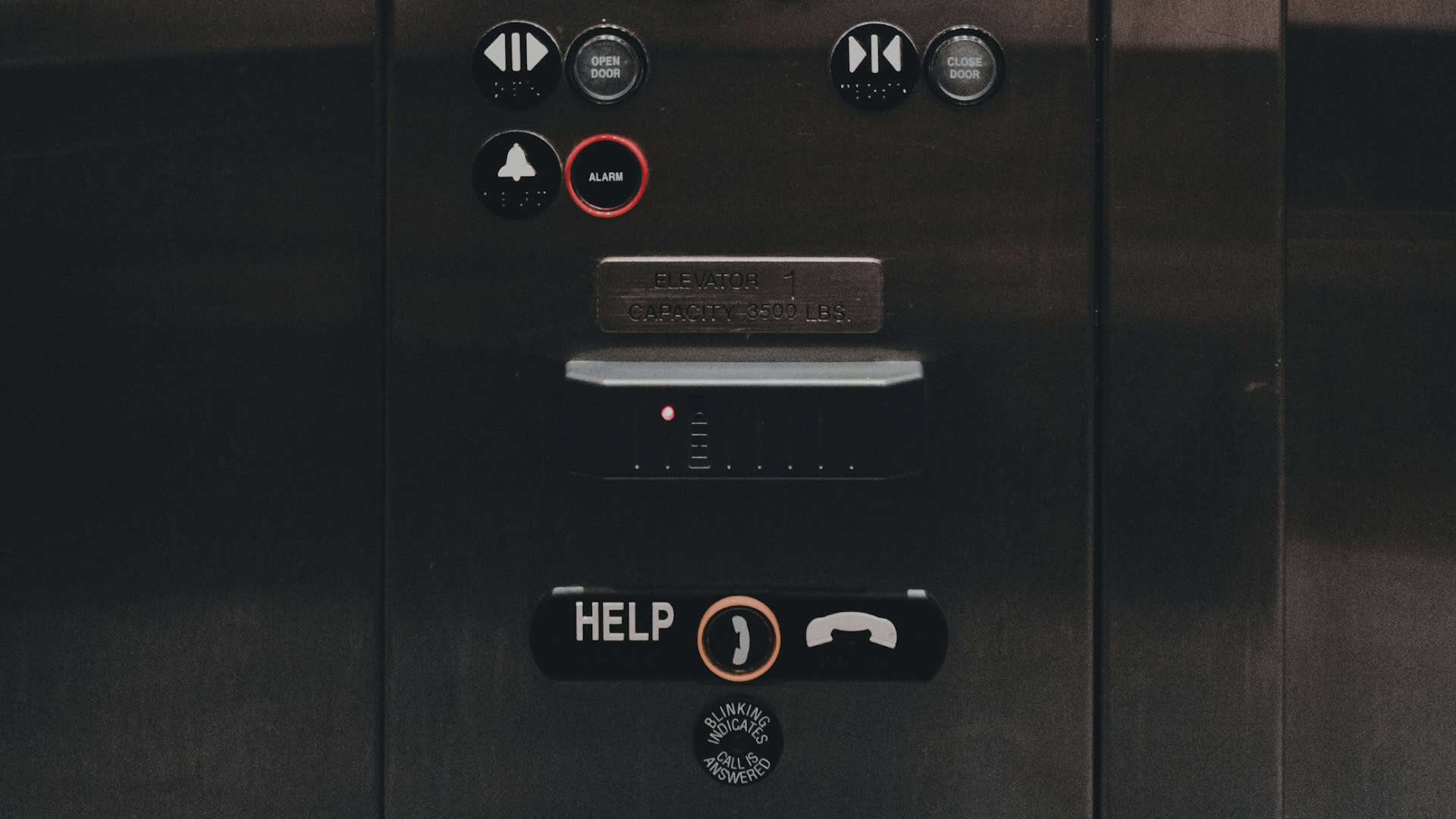
A 4G lift emergency phone solution replaces the analogue phone line serving a lift’s alarm phone with a cellular gateway. The existing emergency phone in the lift car plugs into the gateway’s analogue (FXS) port, and when a trapped passenger presses the alarm button the call travels over the 4G voice network to the monitoring centre instead of over copper. The lift phone, the monitoring centre and the passenger experience stay exactly the same — only the line changes. This keeps the lift compliant with EN 81-28’s requirement for two-way communication with a rescue service as Ireland’s copper network is retired.
The same migration applies wherever an analogue line is being withdrawn — intercoms, door entry, alarm diallers and barriers. See our full guide to the PSTN switch-off in Ireland.
The Line Under Your Lift Phone Is Going Away
Three pressures are converging on every building with a passenger lift.
Copper Withdrawal
Ireland’s analogue phone network is being retired exchange by exchange, and new copper line orders are already restricted in fibre-served areas. A lift phone on a withdrawn line simply stops calling out.
Compliance Exposure
EN 81-28 requires that a trapped passenger can reach a rescue service at all times. A dead line means a non-compliant lift — a liability that sits with the building owner and the maintenance contractor, not the phone company.
Paying for One Button
Many buildings keep a full analogue line rented purely for the lift alarm. Across a portfolio of lifts that recurring line rental adds up — and buys a single point of failure.
The EV8100 — Built for Lift Duty
Robustel’s EV8100 is a 4G VoIP gateway designed for exactly this migration: analogue equipment in, cellular voice out. Robustel state compliance with EN 81-28 and AS1735.

How TITAN Ships It
✓ SIM fitted and tested before dispatch — your preferred operator or ours
✓ Monitoring-centre number and dial plan pre-programmed
✓ Antenna matched to the install — shaft, machine room or roof
✓ Labelled per site for portfolio rollouts — fit, power, done
✓ Irish support from Galway for the life of the install
Signal in a lift shaft is a worst-case environment — concrete, steel and depth. The fix is an external antenna mounted where the signal is, cabled back to the gateway. We spec and supply the right antenna with every unit; browse the range in our antenna selection guide. The EV8100 is part of the Robustel range we supply and support in Ireland.
The Gateway Needs Its Own Battery Now
The 2022 revision of EN 81-28, in force since February 2025, extended the battery-backup requirement beyond the autodialler to the transmitting device itself. A cellular gateway carrying lift alarm calls is expected to hold up under mains failure — which is exactly the moment a passenger is most likely to be trapped.
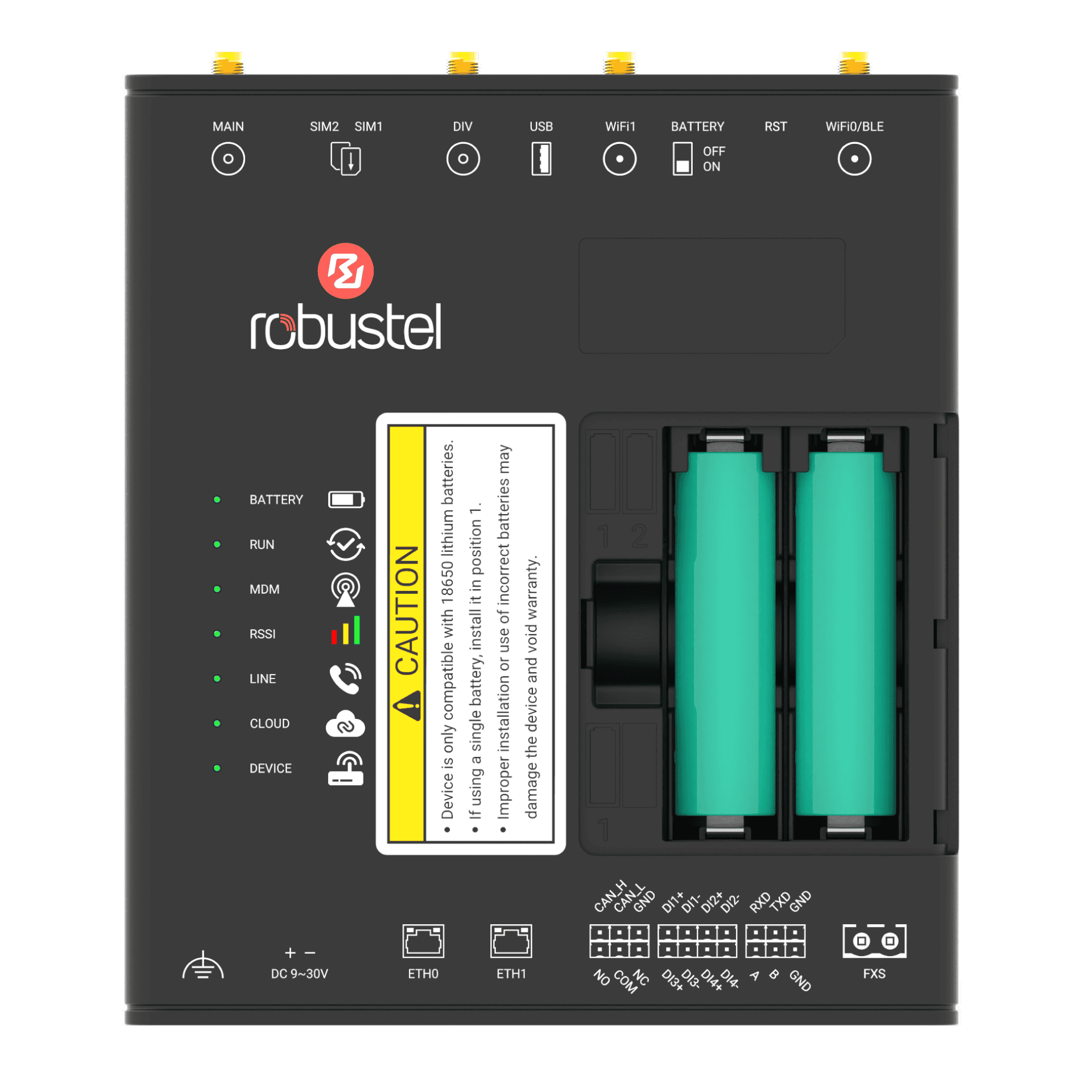
The EV8100 has an onboard holder for two 18650 lithium cells. The cells are not included in the standard package, so on a lift install they are not an accessory — they are part of the specification. We flag them on every lift quotation rather than leaving them to be discovered on site.
Two SIMs from different networks add the second layer: if one operator has an outage or no coverage at that moment, the call goes out on the other. VoLTE is supported as a backup voice path alongside standard VoIP. A single copper line offered none of this.
The Three-Day Test Call Has to Be a Real Call
This is where some cellular alarm products quietly fail, and it is worth understanding before you choose one.
What the Standard Asks
The alarm system must automatically verify its own link to the rescue service at intervals of no more than three days, and a failed verification has to be indicated in the lift car so the owner knows.
Where Products Fall Short
Under the 2022 revision that verification must exercise the same path a real alarm would use. A product that confirms itself with a text message or a data packet is not testing the voice channel a trapped passenger depends on.
Why the FXS Approach Holds Up
The EV8100 presents a real analogue line to the existing autodialler. The dialler places its test call exactly as it places an emergency call, over the same voice path — nothing is simulated in between.
Note that EN 81-28 applies to the alarm system as a whole — the dialler in the car, the transmission path and the receiving centre together. We supply and stage the transmission side; sign-off on the installed system stays with your lift contractor and the monitoring centre.
One Gateway, Two Jobs
The same box that carries the emergency call can carry lift data back to you — if you want it to.

Beyond the FXS voice port, the EV8100 carries four digital inputs and a relay output, RS232, RS485 and CAN serial, and two Ethernet ports. That means door faults, trap alarms, run counts or controller data can travel back over the same connection and the same SIM — no second line, no second box, no second site visit.
It runs RobustOS Pro, a full Debian Linux, with an SDK if you have your own monitoring platform to talk to. Robustel’s RCMS cloud gives fleet-wide visibility of every unit — signal, data usage, online status — which matters when you’re responsible for hundreds of them across a service area.
Most customers start with voice only and add the data side later. Both are scoped per project — tell us what your controllers expose and we’ll advise what can realistically be pulled.
Built for Rollouts, Not One-Offs
Lift service companies, network operators and facilities teams migrating a portfolio don’t need boxes — they need staged units that installers can fit without configuration. That’s our model: tell us the sites, and every gateway arrives programmed, SIM’d, tested and labelled for its lift. Your engineer connects the phone, power and antenna. We handle spares, RMAs and support from Galway, and volume pricing applies from the first rollout.
Got a Letter About the Lift Line?
If you manage apartment blocks or commercial buildings, the first sign of this is usually a notice from the phone provider saying the line serving the lift is being withdrawn. You don’t need to understand the technology — you need the lift to keep working and the block to stay compliant.
Send us the number of lifts and the addresses. We’ll tell you what each one needs, ship it configured, and coordinate with your lift maintenance contractor so their engineer can fit it on a routine visit. One block or forty — the process is the same.
What the Engineer Needs to Know
The practical facts for scoping a machine-room or car-top install.
Mounting
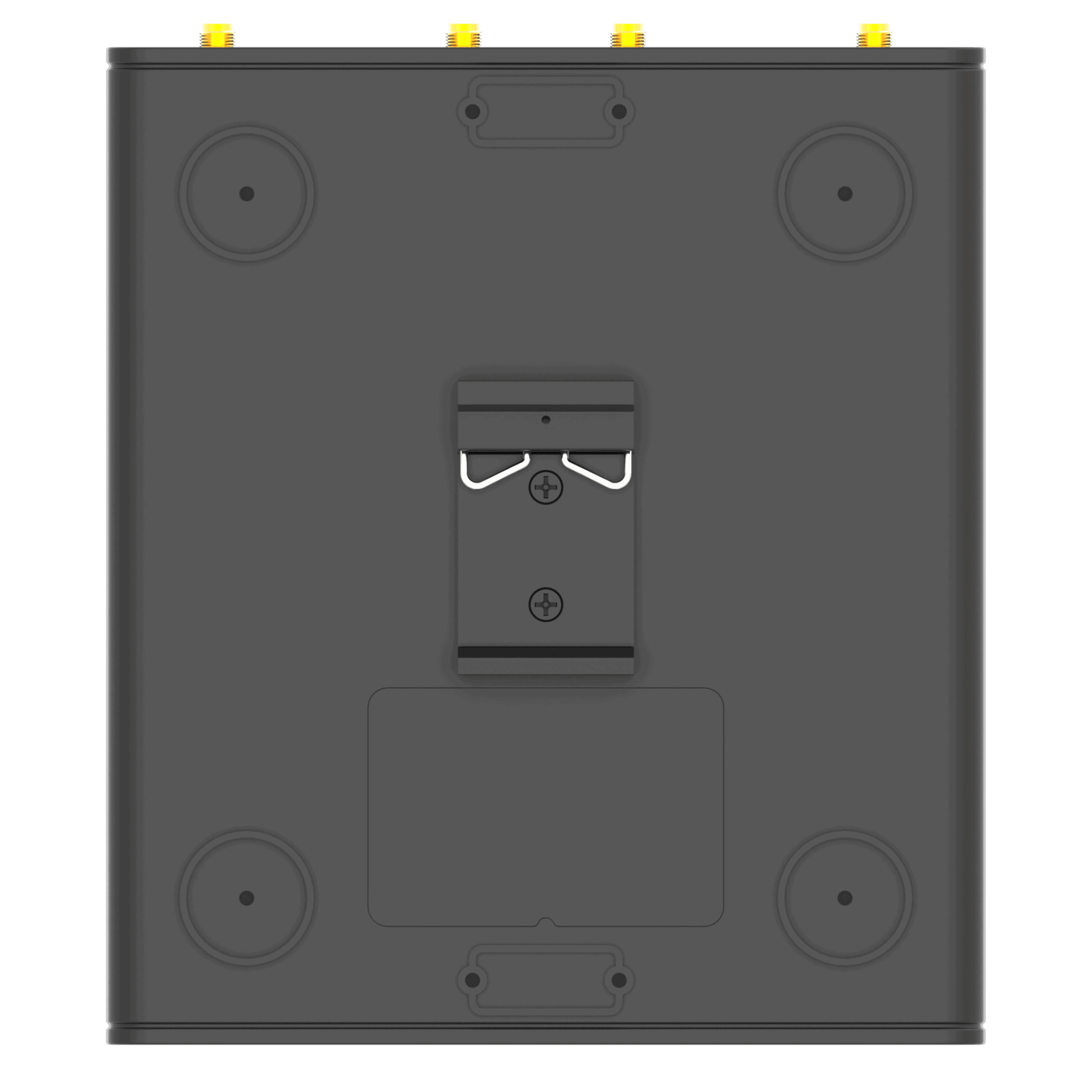
Desktop, wall bracket or 35 mm DIN rail. 35 × 150 × 170 mm, 470 g, IP30 plastic housing.
Power
9–30 V DC input with reverse-polarity and surge protection. 12 V DC / 2 A adapter recommended. 4 W idle, 15 W max.
Temperature
−20 to +60 °C without battery; 0 to +45 °C with battery fitted (charging 0 to +35 °C). Worth checking unheated machine rooms.
Interfaces
1 × FXS (2-pin terminal block), 2 × Ethernet, RS232, RS485, CAN, 4 × DI + 1 relay, USB 2.0.
Cellular
Dual mini-SIM (2FF), two SMA antenna connectors (main + diversity). EU model EV8100-A-4L-A12EU covers LTE B1/3/7/8/20/28A — CE and UKCA marked.
Voice
SIP over UDP, SIPs and SRTP; DTMF in-band, RFC2976 and RFC2833. VoLTE supported as a backup voice path.
Antenna
Two cellular antennas ship with the kitted order codes. Shaft installs normally need an external antenna cabled to the machine room or roof.
Variants
A Wi-Fi and Bluetooth version is available if the install needs local wireless as well. Ask us which order code fits the site.
DIN Rail Mount
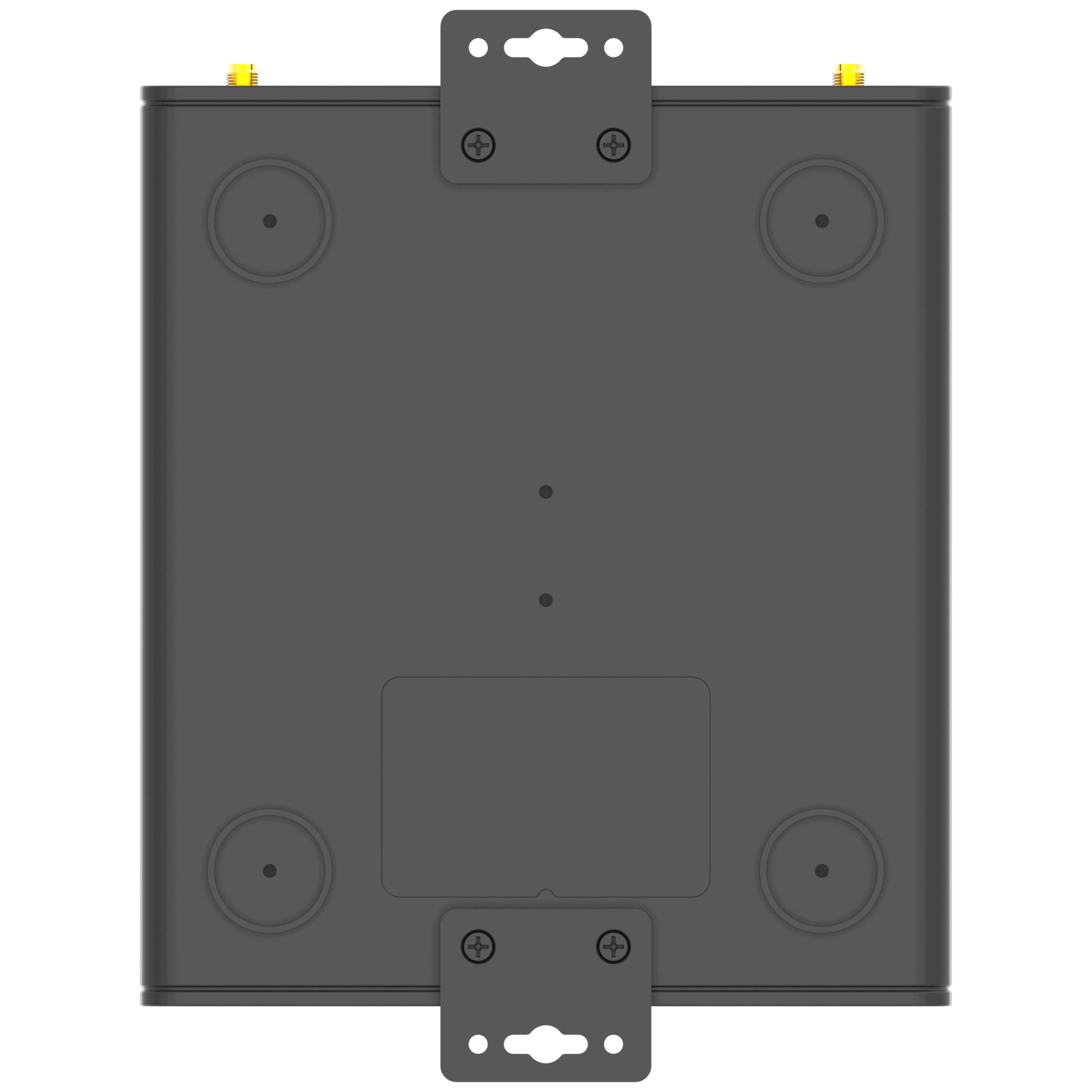
Wall Mount
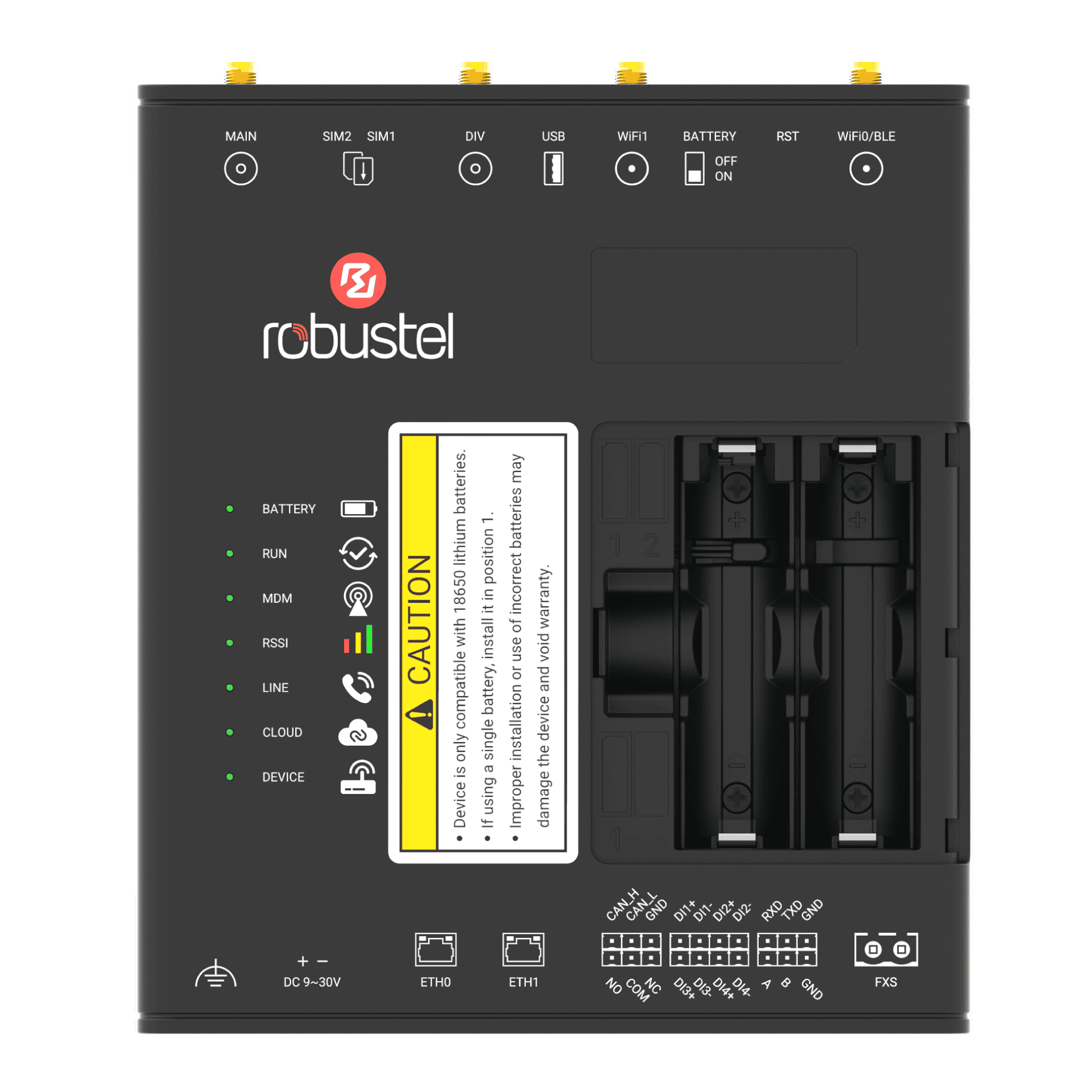
Battery Compartment
Lift Phone Migration Questions, Answered
What is a 4G lift emergency phone solution?
It replaces the analogue phone line serving a lift’s emergency phone with a cellular gateway. The existing phone in the lift car plugs into the gateway’s FXS port, and alarm calls travel over 4G voice to the monitoring centre instead of copper. The phone, the monitoring centre and the passenger experience are unchanged — only the line changes.
Will the lift still comply with EN 81-28 on 4G?
EN 81-28 requires two-way communication between a trapped passenger and a rescue service — it does not mandate copper. A cellular gateway maintains that path, and Robustel state the EV8100 complies with EN 81-28 and AS1735. The 2022 revision, in force since February 2025, tightened two points that matter here: battery backup on the transmitting device, and a three-day test call that uses the real voice path. Compliance rests on the installed system as a whole, not on any single box.
Does it still work in a power cut?
With cells fitted, yes. The EV8100 has an onboard holder for two 18650 lithium batteries, keeping the emergency call path alive when building power fails. Since the 2022 revision of EN 81-28 the transmitting device is expected to have backup power in its own right, so on a lift install the cells are part of the specification rather than an optional extra. They are not included in the standard package — we flag them on every lift quotation.
Do I need to replace the phone in the lift car?
Usually not. The EV8100’s FXS port presents a standard analogue line, so the existing lift phone plugs in directly and behaves exactly as it did on copper — same alarm button, same auto-dial. If the phone itself is being upgraded anyway, we can advise on options as part of the same visit.
What about signal in the lift shaft?
Shafts are poor signal environments, so the gateway is normally installed in the machine room or on the car with an external antenna cabled to wherever the signal is strongest — often the top of the shaft or the roof. We test signal as part of scoping and supply a matched antenna with every unit.
Can one gateway serve multiple lifts in a bank?
No. The EV8100 has a single FXS port, so it serves one analogue phone — one gateway per lift car. In a multi-car bank each car keeps its own independent call path, which is also the safer arrangement: one failed unit cannot take the whole bank offline. Tell us the configuration and we will price the bank as a set.
Whose SIM goes in the gateway?
Your choice. We fit and test the SIM before dispatch — your organisation’s operator SIMs if you have an existing agreement, or SIMs supplied by us. Dual-SIM slots mean a second network can be added for failover either way.
Will the automatic three-day test call still work?
Yes, and it works the way the standard intends. The existing autodialler places its verification call over the gateway’s analogue port exactly as it places a real emergency call, so the test exercises the actual voice path. That matters under the 2022 revision, which requires the verification to replicate the real alarm route rather than relying on a text message or data check.
Can it send lift fault data as well as voice?
Yes. Alongside the voice port the EV8100 has four digital inputs, a relay output, RS232, RS485 and CAN serial and two Ethernet ports, so controller data and fault signals can travel over the same 4G connection. What can actually be pulled depends on what your lift controller exposes, so this is scoped per project.
Migrate Your Lift Phones Before the Line Goes
One lift or a national portfolio — tell us the sites and we’ll stage the migration from Galway.
TITAN IoT Ltd · Racecourse Business Park, Ballybrit, Galway, H91 A9NN
+353 91 757500 · iot@titan.ie